Recording a task in Apple’s Reminders app on your Mac, iPhone, or iPad is just the first step—the app captures what you need to do—but what matters more is being reminded to take action at the right moment. (The most important step, of course, is following through, but that’s on you.)
Here’s how to configure Reminders to get your attention at the right moment, whether through time-based alerts, location triggers, or when you chat with someone in Messages. Particularly helpful is the new alarm feature in iOS 26.2 that ensures you can’t miss time-based alerts. We’ll focus on the iPhone here, but the iPad and Mac interfaces are similar.
Time-Based Notifications
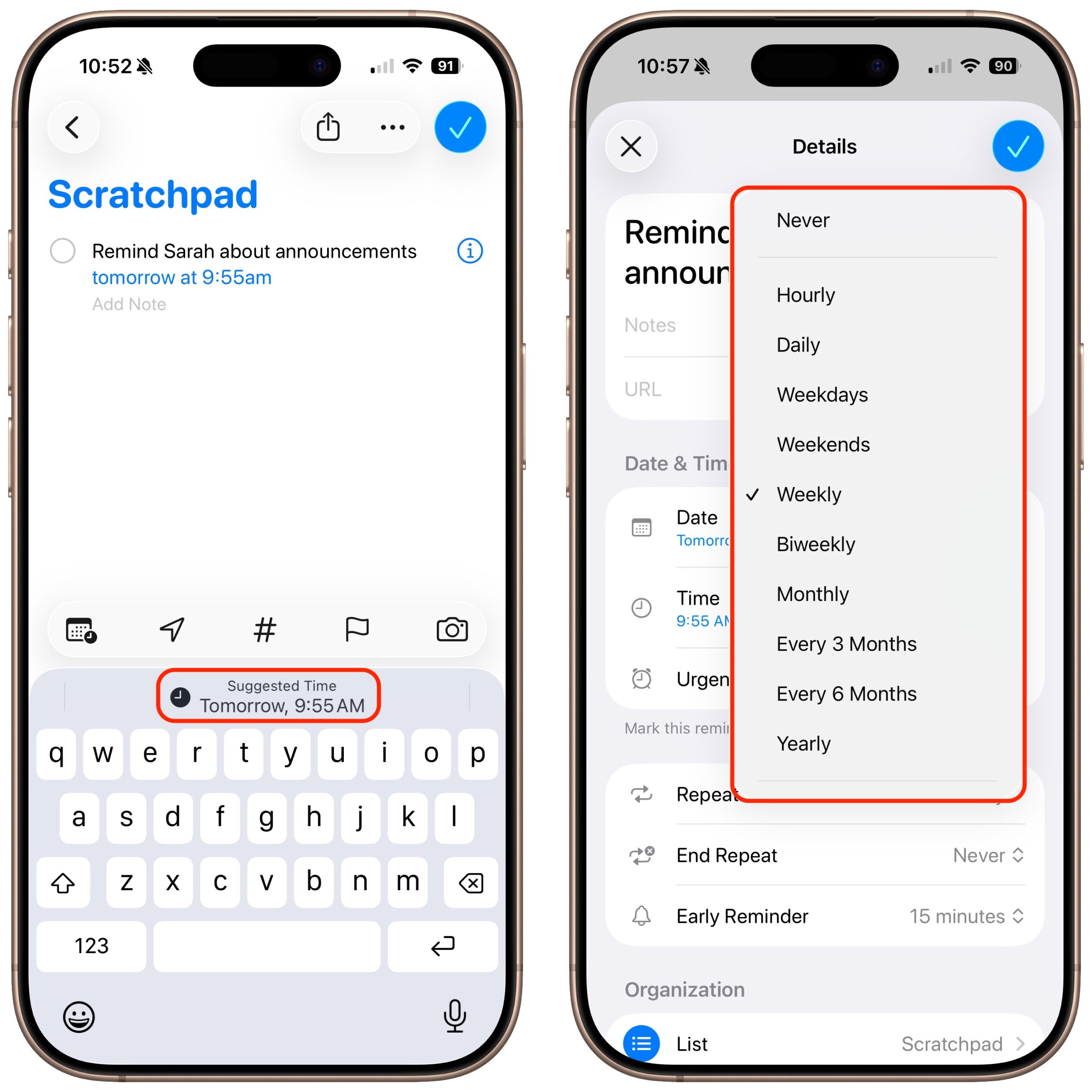
The most straightforward way to be reminded is at a specific date and time. When creating or editing a reminder, turn on the Date and Time switches to set when you want to be notified. You can also enter natural language times in the title, such as “tomorrow at 3 PM”—tap the autocomplete suggestion to convert it to the actual notification time. Voice commands via Siri also work especially well, such as “Siri, remind me to call my mother at 8 PM.” When the time arrives, you’ll receive a standard notification banner on your iPhone, iPad, Mac, or Apple Watch.
For recurring tasks, after setting a date, select an option from the Repeat menu: daily, weekly, monthly, yearly, or custom intervals. Recurring reminders are perfect for routine tasks such as taking out the recycling or submitting weekly reports. (Medication reminders are often used as an example of recurring reminders, but they’re more effectively handled in the Health app.)
Early Reminders
Although reminders are seldom as time-sensitive as calendar events, where you can set multiple alerts ahead of the actual event, it can still be helpful to receive an additional notification to prep for the reminder’s time. For instance, you might want an early notification a week before “Cancel free trial subscription” to evaluate whether you want to keep the service.
After setting a date and time for a reminder, choose an item from the Early Reminder menu to receive an additional notification minutes, hours, or even days before the scheduled time. This gives you a heads-up that something is coming due without replacing the original notification at the scheduled time.
Alarms in iOS 26.2 and iPadOS 26.2
For most reminders, it isn’t important that you start the task as soon as the notification appears. It doesn’t matter exactly when you cancel the free trial, as long as it happens before the renewal date, so a notification that remains on the Lock Screen is sufficient. But for other tasks, missing a notification would be a big problem. If the turkey needs to go in the oven at 2 PM so it’s ready for Thanksgiving dinner, you don’t want to get distracted by the football game and miss the notification.
To help, Apple added an alarm feature in iOS 26.2 and iPadOS 26.2 that lets Reminders trigger full-screen alarms that behave like those in the Clock app. It’s essential for critical reminders that absolutely cannot be missed. Alarms only work for the person who created the reminder, even if the reminder is on a shared list.
To enable an alarm for a reminder, set a date and time, then turn on the Urgent switch. (It doesn’t appear to be possible to enable Urgent via Siri.) When the reminder comes due, instead of a simple notification banner, you’ll see (and hear) an alarm on your iPhone (and Apple Watch) with options to dismiss or snooze it for 9 minutes. The alarm will continue to sound until you respond, making it much harder to ignore than a standard notification. You can even reschedule snoozed alarms if necessary.
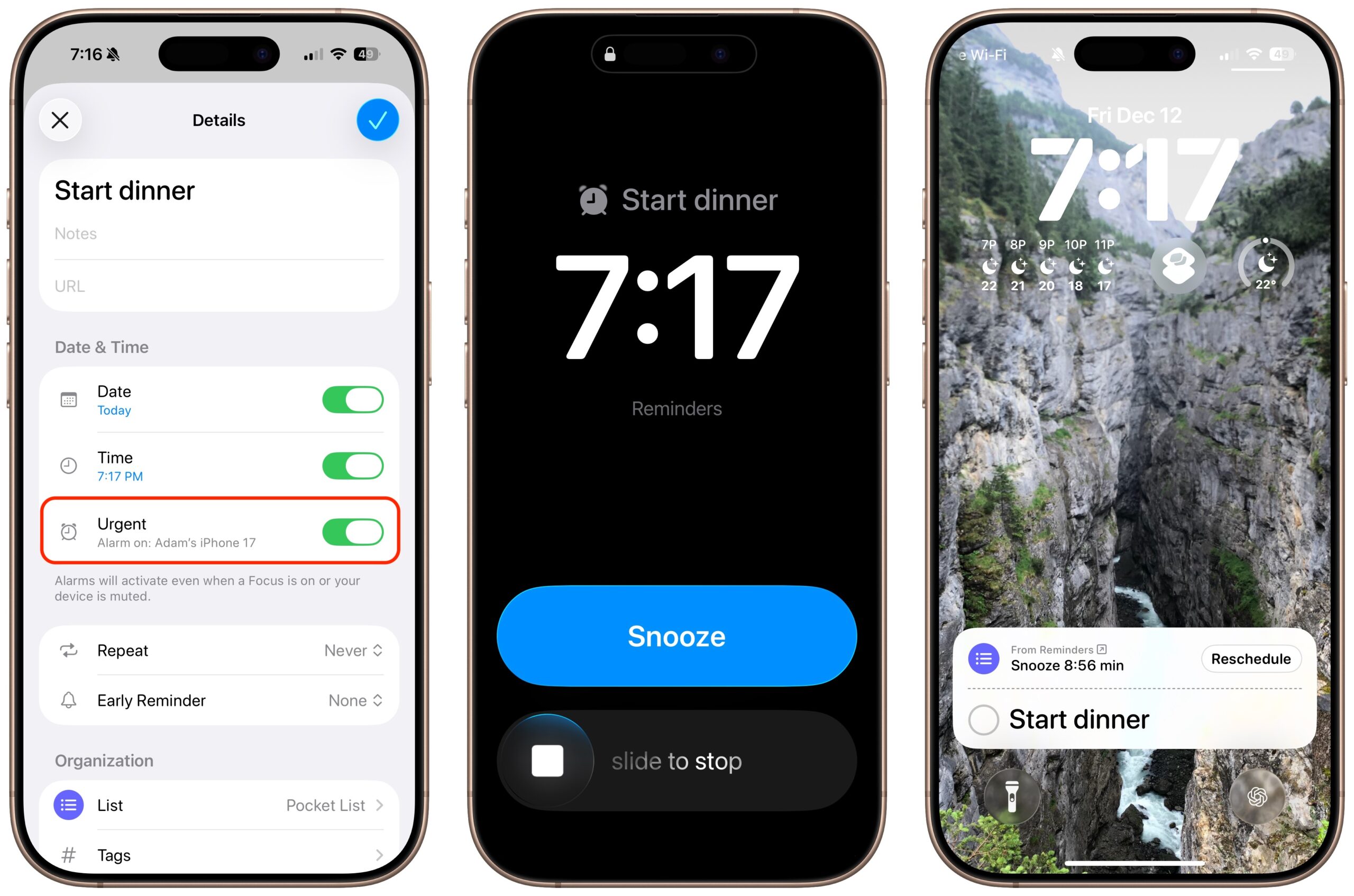
This feature can be a lifesaver for time-sensitive tasks like picking up a prescription before the drugstore closes, joining crucial meetings, or any reminder where a simple banner notification isn’t enough. We hope Apple adds alarms to the Calendar app as well.
Location-Based Reminders
Reminders can also be triggered based on where you are. Location-based reminders are ideal for tasks like “Pick up dry cleaning” when you’re near the cleaners or “Defrost the chicken for dinner” when you arrive home.
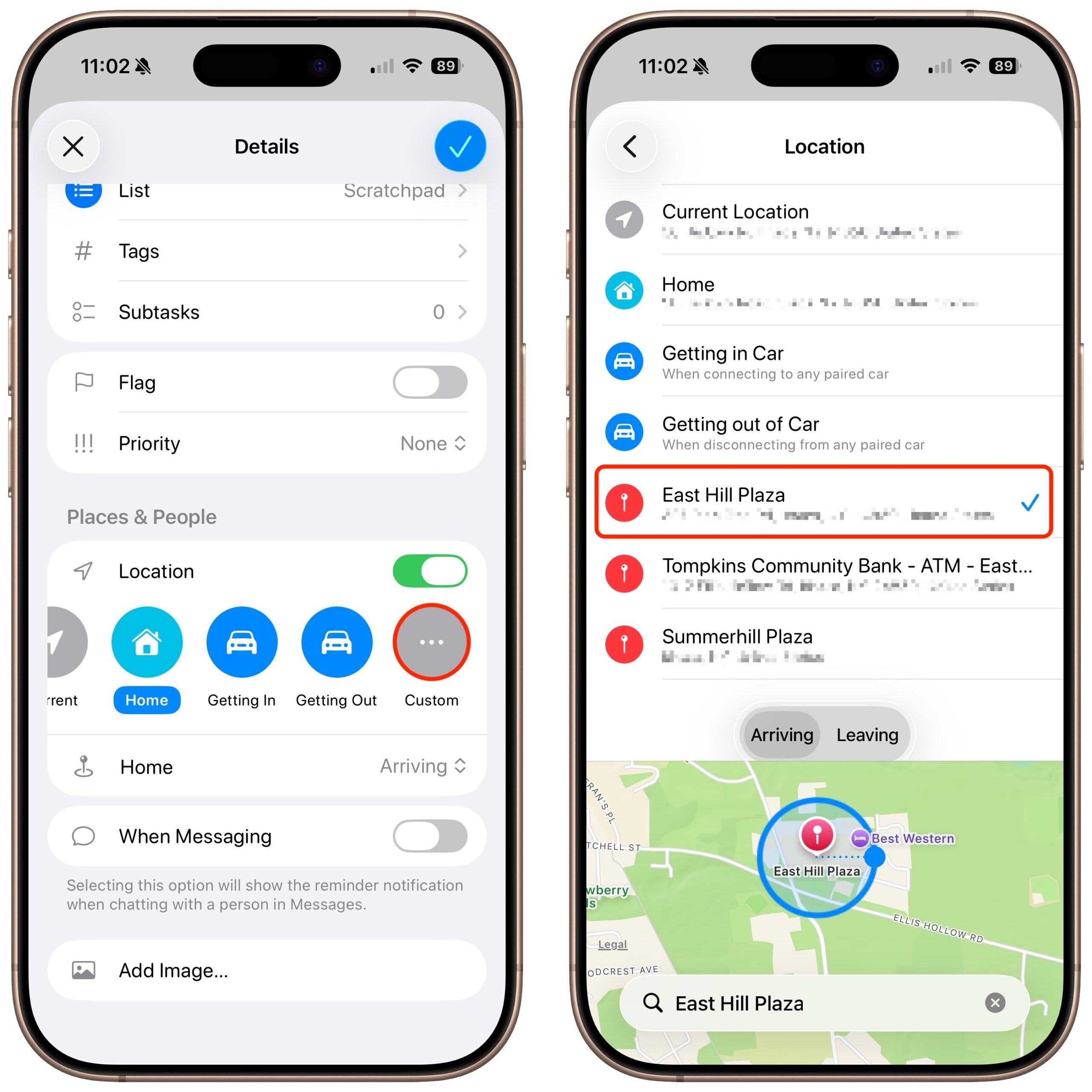
Turn on the Location switch when creating a reminder to choose from options like:
- Current location
- Saved locations like Home and Work
- Custom locations
- Getting In or Getting Out (of a car; these options require a CarPlay or Bluetooth connection to your vehicle)
For the location options, you can request alerts when you arrive or leave. To set a custom location, search for an address or point of interest. You can adjust the geofence radius to control how close you need to be for the reminder to trigger.
Screenshot
When Messaging Someone
If you associate something you want to remember with a particular person, Reminders can notify you when you’re communicating with them in Messages. It’s perfect for things you want to mention but aren’t important enough to warrant starting a conversation—“Ask John about their new puppy.”
When editing a reminder, enable When Messaging and select a contact. The next time you open a Messages conversation with that person, a notification will appear reminding you of the task.
Choosing the Right Alert Method
Each notification type serves different purposes:
- Time-based notifications work well for scheduled tasks and deadlines, with early reminders for advance warning and alarms for critical tasks that can’t be missed.
- Location-based reminders are ideal for errands and place-specific tasks.
- When Messaging ensures you remember to discuss something with a specific person.
By combining these options, you can ensure that essential tasks receive the attention they deserve and are delivered in the way most likely to prompt action.
(Featured image by iStock.com/champpixs)